Elbrus traverse from south to north in 9 days
Climb Elbrus from the comfortable south side, with a night at 3000 m for acclimatization, then descend the wild north slope to Kislovodsk. Nine days, from $2,050.
from $2,050Comfort
- Altitude
- 5642 m
- Duration
- 9 days
- Season
- June-August
- Start
- Mineralnye Vody
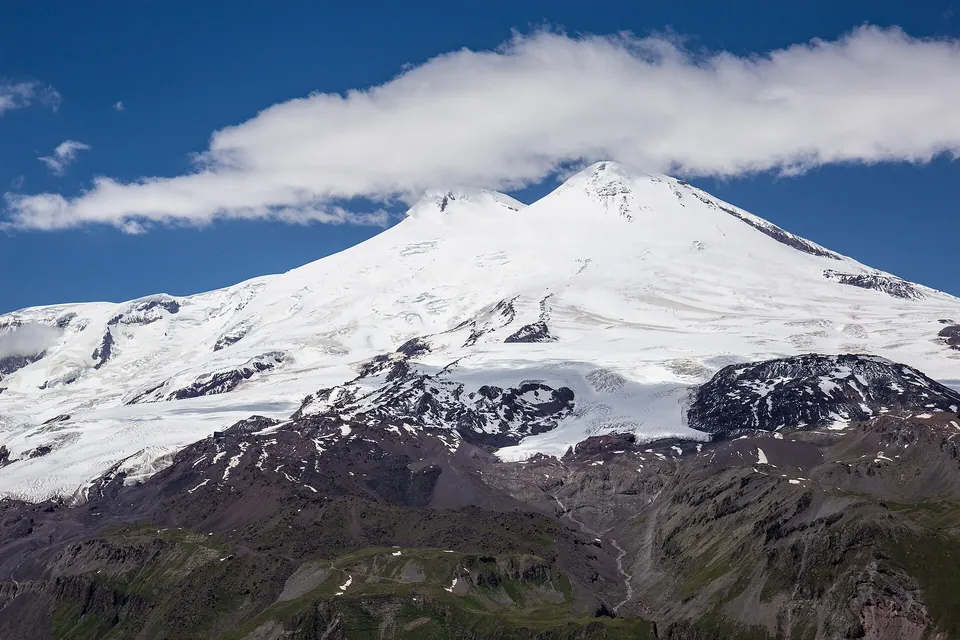
A south-to-north traverse of Elbrus combines the best of both routes: the comfort of the south side and the wild beauty of the north. The ascent from the south is considered the easiest way up the mountain.
The first part of the program is the climb itself, on a carefully planned route that lets you acclimatize smoothly and lowers the risk of altitude sickness. The second part rewards you with wide views of the Caucasus: on the way down from the summit you cross untouched country with waterfalls, mineral springs and big mountain landscapes.
Day-by-day itinerary
9 days · up to 5642 m
Day 1 Arrival in Mineralnye Vody, transfer to Cheget, meet your guide
Please arrive in Mineralnye Vody by 14:00. For early or late arrivals, we can arrange a private transfer for about $80 (up to 3 people). The group transfer takes us to the Cheget Glade, 2000 meters above sea level at the foot of Elbrus: 185 km, about 3 hours by car. We check into the hotel, and in the evening there is a welcome dinner and itinerary briefing.
Day 2 Acclimatization hike to the Maiden Braids waterfall (2800 m) and the RAS Observatory (3095 m) 2800 m
Today’s acclimatization hike takes us to one of the main sights of the southern Elbrus area, the Maiden Braids waterfall at 2800 meters. From there we keep climbing to the Russian Academy of Sciences Observatory at 3150 meters.
The Terskol Peak Observatory has been working since 1980. Scientists here observe space and study ways to protect the Earth from asteroids, comets and space debris.
We return to our hotel in the Cheget Glade for a meeting to choose, rent and check the equipment for the next stage of acclimatization.
Day 3 Move to Cheeper-Azau (3000 m), acclimatization hike up to 3850 m 3000 m
In the morning we pack what we need for the trek; anything else can stay in the hotel’s luggage room. A 3 km drive takes us to the Azau Glade, and a cable car to Stary Krugozor station, where we check into the Cheeper-Azau mountain hotel and have lunch. After lunch, an acclimatization hike past the Sarykaya-Su waterfall to the Mir cable car station at 3450 meters or to a glacial lake. Depending on the weather and how everyone feels, the group may continue to the top station of the Gara-Bashi cable car at 3847 meters. Then we go back down to Stary Krugozor and spend the night at the Cheeper-Azau.
This night at altitude is an important part of the program: it gives your body a first round of acclimatization. Most Elbrus programs go straight from hotels in Cheget, Terskol and Azau at 2100–2300 meters to high huts at 3800–3900 meters. Such a fast change can bring headaches, insomnia and serious physical problems. Our program lets you acclimatize smoothly and gradually, which helps keep these effects to a minimum.
Day 4 Climb to the Pastukhova Rocks (4800 m), snow and ice skills 4800 m
The day starts with a cable car ride to Gara-Bashi (3847 m). Near the station are the two hotels where we will stay the next day: the Heart of Elbrus hotel (3820 m) and the Leaprus eco-hotel (3910 m). After checking our climbing gear, we make an acclimatization hike to the Pastukhova Rocks, which lie at 4600–4800 meters; how high we go depends on the weather and the group’s fitness. Along with a review of safe mountaineering practice, you get hands-on training on the slope: walking in crampons, rope work and self-belay on snow and ice with an ice axe. At the end of the day we descend to the Cheeper-Azau hotel for dinner and the night.
Day 5 Rest day, snow and ice training (3820 m) 3820 m
A rest day is an important part of preparing for the summit, and a chance to catch up on sleep. After a late breakfast we gather our gear and move to the Heart of Elbrus hotel (3820 m) or the Leaprus eco-hotel (3910 m). There is no trekking today. Instead, weather permitting, we practice snow and ice skills, including knots. Lunch, board games, dinner and a briefing on tomorrow’s early start fill the rest of the day. Overnight at the high camp.
Day 6 Summit day (3820 m – 5642 m – 3820 m) 3820 m
Summit day is the most important and the hardest part of the expedition. We start early with a light breakfast, put on harnesses and head out. If you want to save time and energy, you can take a snowcat to the Pastukhova Rocks (4800 m) or to the start of the Kosaya Shelf (5100 m); decide the day before. With a snowcat, departure is at around 4:00 a.m.
The walking group – at least 3 people with one or more assistant guides – starts 3–4 hours before the main group. If one participant cannot continue because of illness or another reason, the remaining 1–2 participants descend with the guide as a smaller group. If fewer than 3 people want to climb without a snowcat, a private guide must be hired at extra cost.
If someone has to turn back low on the mountain (below 4500 m), a second attempt the same day is possible if they get back to the mountain hotel before the main group leaves; they can then join the main guide. After crossing the Kosaya Shelf you reach the Elbrus saddle at 5300 m, where you can rest, have a snack and warm up with hot tea. The ascent to the West Summit (5642 m) usually ends between 10:00 and 13:00, depending on the group’s pace. From 14:00 everyone starts down; the descent takes 5–6 hours. Dinner and overnight at the high camp on the north slope.
Day 7 Reserve day, descent to the base camp (2500 m) 2500 m
The reserve day lets us pick the best weather for the summit. If we reach the top on the planned day, we descend to the base camp to rest and celebrate. After a group debrief you can relax in the hot springs, enjoy a sauna and swap stories with your new friends.
Day 8 Return to Kislovodsk (800 m) 800 m
This day is used for the descent to the base camp and the return to Kislovodsk. Rest at the hotel; at dinner, climbers receive certificates of the ascent. The belongings you left on the south side of Elbrus will be waiting for you at the hotel.
Day 9 End of the tour, transfer to the airport
Morning transfer to Mineralnye Vody after breakfast. In case of delays on the way back, we recommend booking a flight home in the afternoon.
Dates and prices
Traverse south to north, 9 days
What’s included
Included
- Visa invitation letter: we send it as soon as we receive your deposit and a copy of your passport
- Local registration for foreigners, as required by Russian law
- Group transfers: Mineralnye Vody – Terskol, Emmanuel Glade – Kislovodsk, Kislovodsk – Mineralnye Vody
- One of the Cheget Glade hotels: “Snezhny Bars”, “Smile” or “Solnechnaya Glade” (rooms for 2–3)
- Mountain hotel “Cheeper-Azau” (rooms for 5–8 with shower)
- Mountain hotel “Heart of Elbrus” (rooms for 8, shared facilities)
- North slope: base camp (4–10-bed cabins) and high camp (12-bed cabins)
- Hotel in Kislovodsk (twin room with breakfast)
- Experienced guide throughout the program, plus assistant guides on summit day
- Three meals a day made from natural products, including packed lunches for acclimatization hikes and the summit day; a cook throughout the tour
- Group equipment: ropes, carabiners, ice screws, first aid kit
- Safety equipment: GPS navigators, radios, registration with the Ministry of Emergency Situations, expedition medical kit, etc.
- Porters for group equipment and food from the base camp to the high camp
- Prielbrusie National Park entrance fee
- Ski lift and cable car fees
- Transport of your belongings from Terskol to Kislovodsk (if needed)
- Commemorative badge “For climbing Elbrus”
- Certificate of ascent, or of the altitude reached, for each participant
Not included
- Russian entry visa
- Mountaineering insurance (compulsory)
- Private transfer to and from MRV airport ($80–90)
- Single supplement in Terskol/Cheget hotels ($55 per person)
- Single supplement in the Kislovodsk hotel ($80 per person)
- Snowcat ride up (optional, about $200–250 per person)
- Personal clothing and equipment, much of which can be hired (see the kit hire list)
- Personal expenses: gifts, alcohol and bottled drinks, laundry, etc.
- Snowcat ride down (if you choose not to walk)
- Costs of an unscheduled descent for any reason
- Additional summit attempt ($450)
- Elbrus climbing permit: if it is introduced in 2027, it may cost $150–400
- Tips for guides (at your discretion)
Where you sleep
- Days 1–2: hotel in the Cheget Glade, Terskol, at 2100 m (rooms for 2–3)
- Days 3–4: mountain hotel “Cheeper-Azau” at the south base camp, 3000 m (rooms for 5–8 with shower)
- Day 5: mountain hotel “Heart of Elbrus” at the southern high camp, 3800 m (rooms for 4–8, shared facilities), or the VIP eco-hotel “Leaprus”
- Day 6: high camp at 3800 m, heated huts for 8–12 with a separate dining room
- Day 7: base camp at 2600 m, wooden huts for 4–10 people, basic facilities including showers, toilets and Wi-Fi
- Day 8: hotel in Kislovodsk, twin rooms, breakfast and dinner included
One guide per three climbers on summit day
An experienced instructor-guide stays with you throughout the program. On summit day, extra guides join so that there is one guide for every three participants (1:3).
Price: Comfort – $2050, Premium – $2590, Premium Leaprus – $2,780.
Upgraded tariffs: better rooms
Comfort tariff adds
- Cheget Glade hotel: single standard room or a twin superior room
- Mountain hotel “Cheeper-Azau”: rooms for 3–4
- Mountain hotel “Heart of Elbrus”: rooms for 4 with a bathroom on the floor
- North base camp: heated cabins for 2–4
- North high camp: 8-bed cabins
- Single room in the Kislovodsk hotel
- Private transfer from Kislovodsk to Mineralnye Vody airport
VIP tariff adds
- A stay at the exclusive panoramic eco-hotel “Leaprus” (rooms for 12)
Please note: places in the Premium and Premium Leaprus tariffs are limited because there are only a few rooms of this type. We recommend booking early.
Additional services and prices
- Personal equipment hire: sleeping bag, boots, crampons, etc.
- Single supplement in Terskol: $55 per day.
- Snowcat: about $200–250 per person, from the high camp to the Pastukhova Rocks (4800 m) or the Kosaya Shelf (5100 m) and back. It saves energy and time and improves your chances of reaching the summit.
- Extra night at a Cheget Glade hotel: $55 in a twin or triple room, $45 in a single room. Breakfast included, other meals not included.
- Private airport transfer: about $80–90, if you arrive in Mineralnye Vody after 14:15 on the first day, or if your return flight leaves earlier than 11:30 or much later on the last day.
- Extra summit attempt: $450 for 1–3 people. You may need it if conditions are good at the start but turn dangerous (storm, heavy snow, dense fog) and force a descent, or if one or more participants feel unwell or abandon the climb.
- Additional climbing attempt: $450 for guiding, plus $100 per person for mountain accommodation and meals for you and your guide.
- Climbing the second summit (optional): $120.
Photos
Similar tours
Kazbek
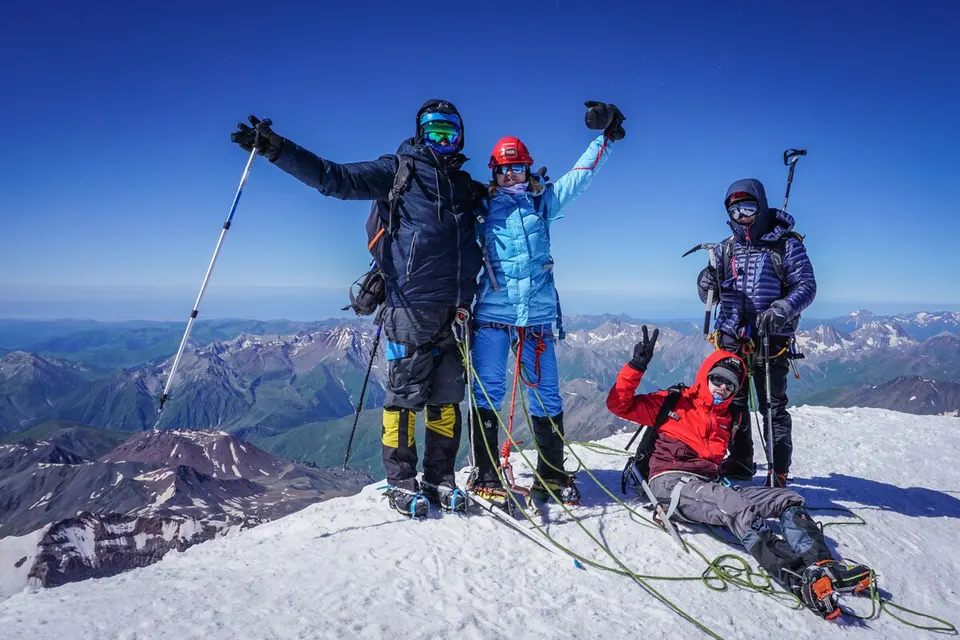
Eight days from Tbilisi to the 5047 m summit by the Georgian route, the easier side of Kazbek and open to beginners in good shape.
Kilimanjaro
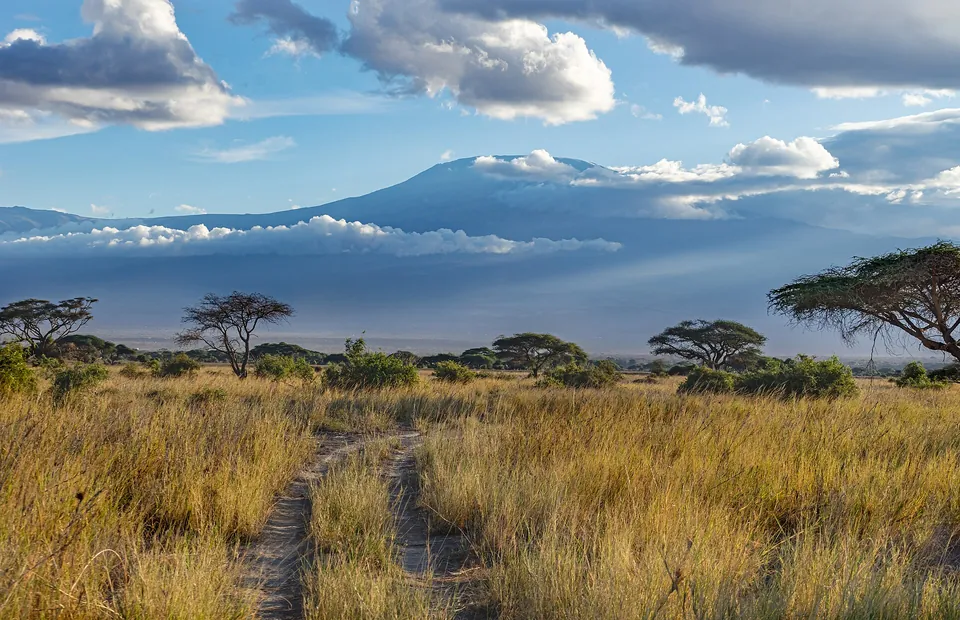
Africa’s highest peak (5,895 m) in eight or nine days via the Marangu, Machame or Lemosho route.
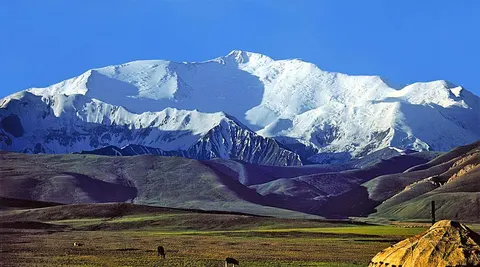
Lenin Peak
A 22-day expedition from Osh to the 7134 m summit of Lenin Peak, Kyrgyzstan’s most accessible seven-thousander, with acclimatization climbs of Yuhin and Razdelnaya.