
Mount Elbrus facts: summits, weather and routes
Two summits, the best months to go, the weather from the valley to the top, and how the south and north routes compare.
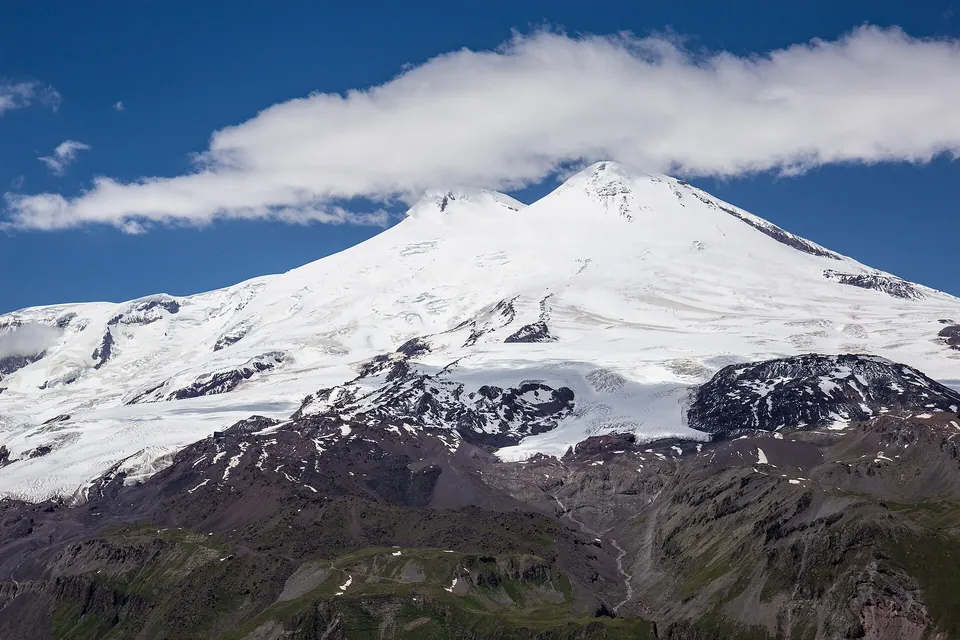
Mount Elbrus stands in the Caucasus, in southern Russia. It has two summits: the West Summit is the higher one (5642 m), and the East Summit is only 21 m lower (5621 m). Whichever of the two you reach, you have climbed Mount Elbrus.
The first person to climb Elbrus was a local man, Killar Khashirov, in 1829.
Best time to go: July and August
Your chances of reaching the summit are highest in summer, from June to September. July and August are the best months: it is warm, and the weather is fairly stable. Still, nobody can guarantee good weather on summit day, which is why our itinerary includes a reserve day.
A winter ascent is also possible, but it can be very cold – down to −40 °C on the top.
Summer weather from the valley to the summit
In summer, when most people climb, expect these temperatures:
- +20…+25 °C in the valley (2500 m)
- +10 °C by day and 0…−5 °C at night at the Barrels Hut (3800 m)
- +5…−25 °C on the top, depending on the weather
The weather changes fast and usually gets worse in the afternoon, so we start the descent no later than 2 p.m. Fog is common on Elbrus and is a real danger: when you can see nothing, you cannot tell which way to descend. Without an experienced guide it is easy to get lost or fall into a crevasse.
South or north: same chances, different experience
The south route is the most popular and the easier one. You sleep first in a hotel and then at the Barrels Hut. Lifts run up to 3800 m (the Barrels Hut), so you do not have to carry your backpack, and on summit day most climbers take a snowcat from the Barrels Hut (3800 m) to the Pastukhov Rocks (4600 m).
The north route is more scenic and much quieter. Climbers sleep in tents and carry their own backpacks from the base camp (2500 m) to the high camp (3800 m). It is also a little more technical: there are several crevasses at the start of the glacier, so for the first 2–3 hours climbers move roped together.
Your chances of reaching the summit are the same whichever route you choose.