Everest Base Camp Trek in Nepal
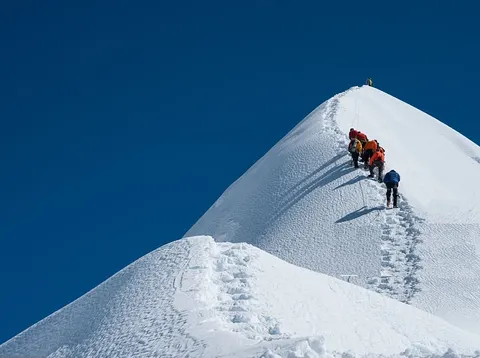
The classic Himalayan trek up the Khumbu Valley to Everest Base Camp and Kala Patthar, the best viewpoint of Everest. No climbing skills needed: nights in lodges and gradual acclimatization.
from $2,200
- Altitude
- 5364 m
- Duration
- 15 days
- Season
- April-May
- Start
- Kathmandu
This is the legendary trek to Everest Base Camp, at the foot of the highest mountain on the planet, called Jomolungma in Tibetan and Sagarmatha in Nepali. It is the most popular trek in Nepal, and travelers come from all over the world for several reasons.
- The scenery. The views of the Khumbu Valley peaks change all the way up. At the start, around 2500 meters, the valley is green and forested; higher up the greenery fades into rugged mountains and snow-capped peaks, and the Khumbu River turns into a glacier.
- No technical skills. It is a relatively easy walking route that needs no climbing experience.
- Lodges, not tents. You stay in guesthouses, so there is no camping, and there are plenty of cafes and tea houses along the way.
- Proper acclimatization. You gain no more than 500 meters a day and spend one or two nights in each new place. By the time you reach base camp you are ready to climb Kala Patthar (5545 meters), the highest point of the trek and the best viewpoint of Everest.
- Sherpa culture. You get to know the Sherpa people, native to Khumbu, and spend a full day in Namche Bazaar, the administrative center of the region – a town above 3000 meters surrounded by ancient Buddhist monasteries.
Dates and price 2027 (including Ramechhap – Lukla – Ramechhap flights)
10.04.2027–24.04.2027, group with a Russian guide: $2,200
Day-by-day itinerary
14 days · up to 5364 m
Day 1 Kathmandu – Ramechhap
Arrival in Kathmandu, the capital of Nepal. A guide meets you at the international airport and takes you to the hotel to rest after the flight. In the afternoon a private minibus takes us from Kathmandu to Ramechhap village, about 4 hours away. Night in a guesthouse in Ramechhap (1200 m).
Day 2 Ramechhap – Lukla (2860 m) – Phakding (2600 m) 2860 m
An early start and a short flight from Ramechhap to Lukla in a single-engine plane. We land at the famous Tenzing-Hillary Airport in Lukla, a small town in the Khumbu Valley where the trek begins. If we miss breakfast in Ramechhap, we have it in Lukla. Then 3–4 hours of walking to Phakding, a village where we spend the night in a comfortable guesthouse.
Day 3 Phakding – Namche Bazaar (3400 m), 6–7 hours 3400 m
After breakfast we walk up toward Namche. On the way we pass a checkpoint at Monjo village, where we can also have lunch. In the afternoon we reach Namche, a beautiful old town on the slopes of the Khumbu hills.
Day 4 Full day in Namche
An acclimatization day with two options. We can walk a couple of hours up from Namche to a viewpoint at 3900 m, have lunch at the famous Japanese-built Everest View hotel and come back down to Namche. Or we can explore Namche itself: museums, monasteries and handicraft shops.
Day 5 Namche – Tengboche (3860 m), 5–6 hours 3860 m
We continue up the Khumbu Valley from Namche to Tengboche, stopping for lunch in a village on the way. In the afternoon we reach Tengboche, a small place with just four guesthouses around Tengboche Monastery, the oldest and largest Buddhist monastery for monks in Khumbu. We visit the monastery and, if we are lucky, see a puja, a prayer ceremony performed by the monks.
Day 6 Tengboche – Dingboche (4350 m), 6 hours 4350 m
On the way to Dingboche the green Himalayan slopes slowly give way to desert hills. The air gets drier, and your skin needs sunscreen. Dingboche is quite a big village with many guesthouses, cafes and even a cinema. Night in a simple guesthouse.
Day 7 Dingboche – Lobuche (4900 m), 5 hours 4900 m
Today we slowly gain almost 600 m. The path is not steep, but by the end of the day the altitude can make breathing harder. We stop for tea at Thukla village and pass the memorial alley, where the names of climbers from all over the world are carved on plaques and rocks. The evening is spent in our lodge in Lobuche by a Sherpa-style stove fueled with wood or yak dung.
Day 8 Lobuche – Gorak Shep (5100 m) – Everest Base Camp (5300 m) 5100 m
After breakfast it is only 3 hours to Gorak Shep, the last village on the way to Everest. The path runs along the Khumbu Glacier, and in the last hour we finally see the summit of Everest itself – a black pyramid peering out from behind Nuptse. At our lodge in Gorak Shep we have a light lunch or just hot drinks, then walk about 2 hours to the legendary base camp. In spring about a thousand people live here: climbers, Sherpa guides, porters, cooks and other staff. In the afternoon we return to our lodge in Gorak Shep.
Day 9 Gorak Shep – Kala Patthar (5643 m) – Pheriche (4370 m) 5643 m
We get up at 4 a.m. to climb Kala Patthar, the goal of the whole tour. We need to be on top before 8 o’clock to see Everest and its neighbors – after 9 a.m. the sky usually clouds over. We spend 20–30 minutes on Kala Patthar to enjoy the view and take photos and are back in Gorak Shep by 10 a.m. for breakfast. Then we walk down the Khumbu Valley to Pheriche village, about 4–5 hours.
Day 10 Pheriche – Namche, 6–7 hours
Day 11 Namche – Lukla, 6–7 hours
Day 12 Back to Kathmandu
Flight from Lukla to Ramechhap and drive from Ramechhap to Kathmandu. In the afternoon, a sightseeing tour of Kathmandu: Pashupatinath Temple, Boudhanath Stupa and Swayambhunath Stupa.
Day 13 Reserve day
A reserve day in case there are no flights on the previous day because of clouds. Otherwise we spend a full day sightseeing in Kathmandu.
Day 14 Departure from Kathmandu International Airport
Dates and prices
Everest Base Camp trek dates
What’s included
Included
- Experienced guides
- Hotel in Kathmandu, 3 nights, with breakfast
- Transfers according to the program
- All permits for the national parks
Not included
- International flights to Nepal
- Nepal visa ($50)
- Lunches and dinners in Kathmandu ($30–40 a day)
- Accommodation and meals on the trek ($35 a day)
- Personal porters: one porter carries the luggage of two people, $20 a day per porter
- Flights Ramechhap – Lukla – Ramechhap (about $360)
- Tips for porters ($50 per porter)
- Insurance covering helicopter evacuation from up to 6000 m (about $80)
- Transfer from the Kathmandu hotel to the international airport
- Other costs
Clothing and equipment
- Personal cup, plate and spoon
- Thermos
- Sleeping bag rated to −7°C (comfort)
- Headlamp
- Trekking boots
- Light sandals
- Sneakers
- Breathable membrane jacket (e.g. Gore-Tex)
- Breathable membrane trousers (e.g. Gore-Tex)
- Down vest
- Fleece jacket
- Fleece trousers
- Thermal underwear (long johns and a long-sleeve top)
- Long-sleeve shirts and T-shirts
- Light and warm socks
- Light, comfortable trousers and shorts
- Sun hat
- Warm gloves
- Warm fleece hat
Also bring
- A 75–90 l backpack or any large bag for the porter to carry
- A small light backpack for valuables and personal items you carry yourself
- Rain cover for your bag
- Sunglasses in a hard case
- Trekking poles (optional)
- Personal first aid kit
- Sunscreen, SPF 45+
- Trekking towel
- Toothpaste, toothbrush, soap
- Wet wipes
Everything on these lists can be bought in Kathmandu, but you will not have much time for shopping and the quality is not always good. Buy the most important items – boots, sleeping bag, jacket and trousers – in advance.
Good to know
Visa and documents
You need a Nepal tourist visa, which you can get on arrival at Tribhuvan International Airport in Kathmandu. Fill in the application form at the airport and hand it to the immigration officer with two passport-size photos. A 30-day tourist visa costs $50. Your passport must be valid for at least 6 months after your arrival date. Diplomatic passport holders can enter Nepal without a visa.
Insurance
Your insurance must have a coverage of at least $35,000 and include helicopter evacuation from altitudes of up to 7000 meters.
Domestic flight
The trek starts in Lukla, which the group reaches by a domestic flight from Ramechhap. We book return tickets for all group members; a return ticket costs $360.
Lodges on the trek
All the way you sleep and eat in simple guesthouses (lodges) built of wood or stone. A typical lodge has 10–15 rooms for 2 guests each, separated by thin walls. The heart of the lodge is the restaurant, which also serves as the reception and the common room where trekkers spend their evenings after a hard day’s walk. A room with a private bathroom costs a little more; otherwise one bathroom is shared by 5–7 rooms. In Lobuche and Gorak Shep there are no rooms with private bathrooms and no showers at all, but you can buy a bucket of hot water to wash.
Porters
Porters are usually Nepalis from one of the mountain peoples: Sherpa, Tamang, Manangi, Gurung and others. In the guesthouses they stay in special porters’ rooms, sometimes in a different lodge from the trekkers. The fee you pay a porter includes his food and lodging on the trek, so you do not need to buy his meals.
Similar tours
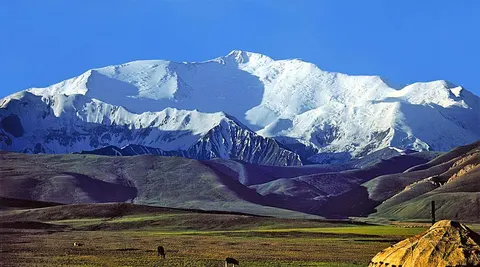
Lenin Peak
A 22-day expedition from Osh to the 7134 m summit of Lenin Peak, Kyrgyzstan’s most accessible seven-thousander, with acclimatization climbs of Yuhin and Razdelnaya.
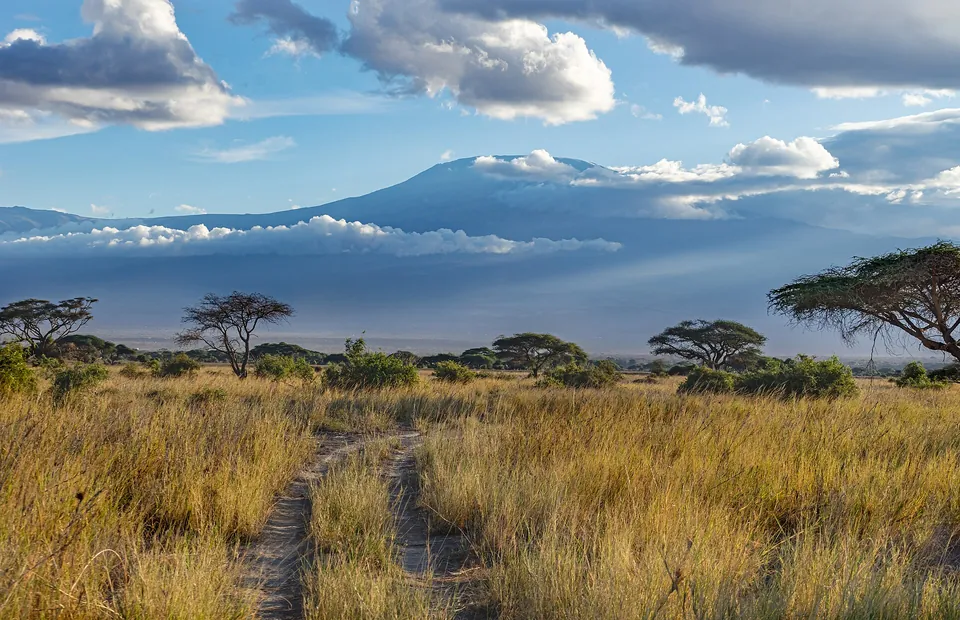
Kilimanjaro
Africa’s highest peak (5,895 m) in eight or nine days via the Marangu, Machame or Lemosho route.