Kailash Kora: Tibet Trek from Nepal
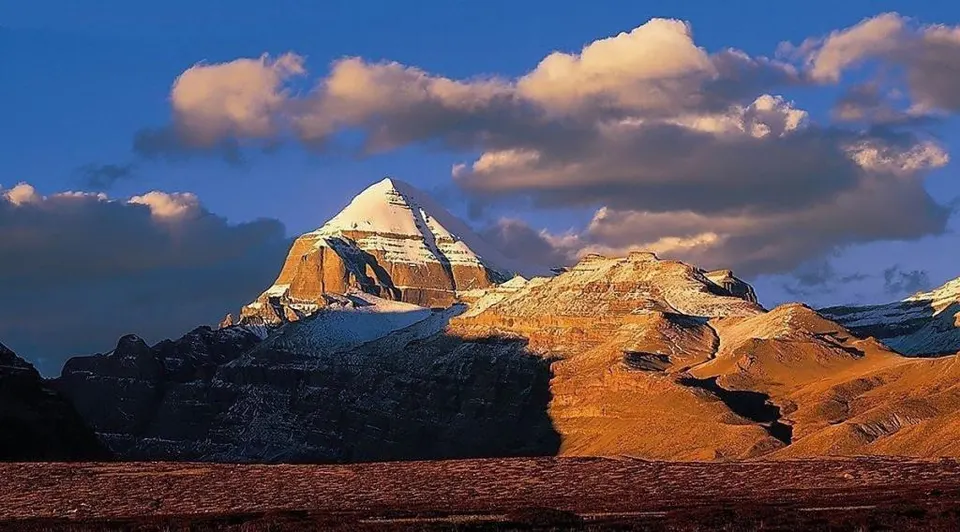
From Kathmandu to Tibet: acclimatization in Nepal’s Langtang National Park, the holy lakes Manasarovar and Rakshas, and the 53 km kora around Mount Kailash over the Dolma La pass.
from $2,100Group of 8-10 pax
- Duration
- 19 days
- Season
- May, October
- Start
- Kathmandu
This journey from Nepal to Tibet with the Kailash Kora combines trekking, culture and a spiritual experience. It suits those who travel not only to see new places but for a deeper personal experience.
The program has four stages
- Acclimatization in Nepal: a few days near Gosaikunda Lake and a hike to Surya Peak to prepare your body for high altitude.
- The holy lakes of Tibet: Lake Manasarovar and Lake Rakshas, with time to rest in natural hot springs.
- The Kailash Kora: the main and hardest part of the journey – a 53 km trek around Mount Kailash, sacred in four religions, including the crossing of the Dolma La pass.
- Culture: the “Valley of Happiness”, known for its apricot trees and a way of life unchanged for centuries.
The tour ends back in Kathmandu with a full sightseeing day.
Highlights of the tour
- Several climate zones in one trip
- Proper, gradual acclimatization
- The holy mountain Kailash
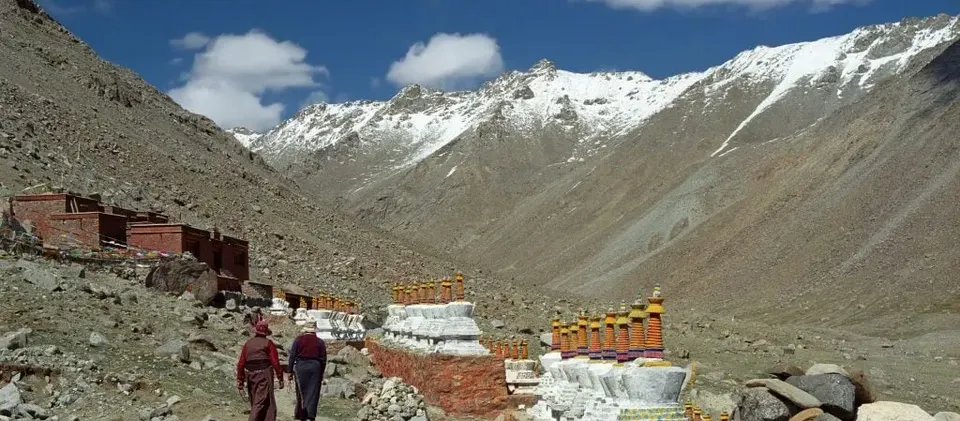
- Authentic Buddhist monasteries
- Exotic animals and birds
- Tibetan cuisine
- The UNESCO World Heritage sites of Kathmandu
Route
Kathmandu, 1350 m – Singh Gompa, 3300 m – Laurebina Yak, 3900 m – Gosaikunda lake, 4100 m – Surya Peak, 5145 m – Mangsen Gompa, 3320 m – Syabrubesi, 1460 m – Saga, 4500 m – Manasarovar, 4600 m – Darchen, 4650 m – Dirapuk monastery, 4950 m – Shiva Tsal, 5330 m – Dolma La pass, 5630 m – Tukje Chenpo, 5440 m – Zutulpuk monastery, 4835 m – Saga, 4500 m – Paiku Tso, 4550 m – Kerung, 2800 m – Kathmandu, 1350 m
Day-by-day itinerary
18 days
Day 1 Kathmandu, 1350 m 1350 m
Transfer from Tribhuvan International Airport to a hotel in Kathmandu. We obtain the group permit for the Tibet Autonomous Region (People’s Republic of China). Evening walk around Thamel, the tourist district of Kathmandu. Night at the hotel.
Day 2 Sightseeing day in Kathmandu (can be moved to the end of the tour)
We visit:
- Patan, the historic town south of the Bagmati River, considered one of the most beautiful places in the world, with 1200 temples and stupas
- Swayambhunath Stupa, believed to mark the first human settlement in the Kathmandu Valley
- Durbar Square, a UNESCO World Heritage site
Night at the hotel.
Day 3 Kathmandu – Deurali, 2600 m 2600 m
After breakfast a private jeep takes us to Dhunche village (1950 m). We have tea, hand our luggage to the porters who will carry it to Deurali, and start walking. Dhunche lies in Langtang National Park, founded in 1970. Night in a guesthouse in Deurali.
Day 4 Deurali, 2630 m – Singh Gompa, 3300 m 2630 m
Today we walk through pine forest to the village of Dimsa and on to Singh Gompa, about 5 hours including a lunch break. Singh Gompa is a Tamang monastery at 3250 m, with a shop nearby that sells yak cheese. Red pandas are sometimes seen here. Night in a lodge near the monastery.
Day 5 Singh Gompa, 3300 m – Laurebina Yak, 3900 m 3300 m
Today we walk as slowly as possible – this matters for good acclimatization. We stop for lunch at Cholangpati, where you can also buy souvenirs, then walk another 2–3 hours through rhododendron thickets to Laurebina. In the evening, views of Ganesh Himal, Langtang and the Tibetan mountains. Night in a lodge.
Day 6 Gosaikunda lake, 4100 m 4100 m
After breakfast we slowly hike up to a viewpoint above Gosaikunda Lake, hidden among the mountains, about 3 hours. We reach our lodge by lunchtime, and later take an acclimatization walk to the holy lake itself. The lake is frozen for half the year. Pilgrims from India and Nepal come here: legend says Shiva created the lake with a blow of his trident.
Day 7 Gosaikunda lake. Surya Peak climb attempt, 5140 m 5140 m
After an early breakfast we walk 4.5 km to Surya Peak. If we reach the top, we gain 750 m. If the hike feels too hard, you can turn back on the way and walk a kora around the lake instead.
Day 8 Gosaikunda lake, 4100 m – Mangsen Gompa, 3000 m 4100 m
Today we head toward Syabrubesi, descending through beautiful meadows and rhododendron woods, 5–6 hours. We stop at Mangsen Gompa. Night in a lodge at the monastery.
Day 9 Mangsen Gompa, 3000 m – Syabrubesi, 1460 m 3000 m
We continue down to Syabrubesi and rest there before crossing the Tibetan border the next day. Night at a hotel.
Day 10 Syabrubesi, 1460 m – Saga, 4500 m 1460 m
Early breakfast and a 25 km jeep ride to Rasuwa, where we cross the border between Nepal and Tibet. We meet our Tibetan guides and drive 40 minutes to Kerong town for lunch and police registration. Then we drive up onto the Tibetan Plateau, with a short stop at the Chakhyung pass (5200 m). From Gyirong we cross the Brahmaputra and reach Saga, a town at 4500 m. Night in a lodge.
Day 11 Saga, 4500 m – Mayum La pass, 5207 m – Manasarovar, 4600 m 4500 m
After breakfast we drive over the Mayum La pass to Lake Manasarovar, about 8 hours through superb mountain scenery, with frequent photo stops. Night in a guesthouse, 4–5 people per room.
Day 12 Manasarovar, 4600 m – Darchen, 4650 m 4600 m
After breakfast there is time to walk to the lake, bathe in the hot springs at Chiu Gompa monastery and drive to the salt lake Rakshas. At about 2 p.m. our minibus takes us to Darchen, a 40 km drive of about 30 minutes. Lunch at our guesthouse in Darchen and an afternoon walk around town.
Day 13 Darchen, 4650 m – Dirapuk monastery, 4950 m 4650 m
Today we begin the kora around Kailash. The first day is fairly easy. From Darchen we walk about an hour to Tarboche, cross a bridge over the Lha Chu river and reach Chuku Monastery, built on Nyenri mountain in the 13th century. The monastery has three holy caves. Further on we pass the Tamdrin Dronkang rock with the self-manifested image of Hayagriva. The day ends at Dirapuk Monastery; Dirapuk means “cave of the female yak horn”.
There is also a cave called Gotsangpy here. The monastery faces the north side of Kailash, and on a full-moon night the view of the mountain is stunning. Night in a guesthouse.
Day 14 Dirapuk Monastery (4950 m) – Shiva Tsal (5330 m) – Dolma La pass (5636 m) – Tukje Chenpo lake (5440 m) – Zutulpuk Monastery (4835 m) 4950 m
The second day of the kora is the hardest because of the Dolma La pass. We leave Dirapuk very early to spend less time in the strong sun. After crossing the Dolma Chu river we climb to Shiva Tsal, where pilgrims undergo a symbolic death and leave behind an item of clothing to represent their old life. Nearby is the hill of Vajrayogini, a burial place for lamas and pilgrims.
Dolma La is the pass of the goddess Tara, one of the main bodhisattvas of Tibetan Buddhism; its top is covered with mani stones and prayer flags. On the way down we see the turquoise Tukje Chenpo lake, almost always covered with ice. In the afternoon we reach Zutulpuk Monastery, whose name means “the miracle cave”: the master Milarepa meditated here. Night in a guesthouse in front of the cave.
Day 15 Zutulpuk monastery, 4835 m – Saga, 4500 m 4835 m
The last and easiest day of the kora: a two-hour walk brings us back to Darchen, then a 7-hour drive to Saga. Night in the same guesthouse in Saga.
Day 16 Saga, 4500 m – Paiku Tso lake, 4550 m – Kerung, 2800 m 4500 m
After breakfast we drive 190 km to Kerung, the Valley of Happiness, including a 40 km detour to see Shishapangma, the lowest of the eight-thousanders, and Paiku Tso lake.
Day 17 Return to Kathmandu
A long drive back to Nepal, to Kathmandu. Night at a hotel in Kathmandu.
Day 18 Transfer to Tribhuvan International Airport, departure from Nepal
Breakfast and transfer to the airport.
What’s included
Included
- An experienced Russian guide for the whole tour
- Langtang National Park permit in Nepal
- Porters for the trekking part in Nepal, 20 kg of luggage per porter
- Porters or pack yaks for the Kailash Kora, 15 kg per porter (one porter for two travelers)
- Chinese group visa for Tibet
- Kora permit
- English-speaking Tibetan guide in Tibet
- Ground transport for the whole tour (jeep or minibus)
- Accommodation
- Breakfasts
Not included
- International flights to Nepal
- Nepal tourist visa
- Meals other than breakfast
- Medical insurance
- Anything not listed as included
Clothing and equipment
- Personal cup, plate and spoon
- Thermos, 1 l
- Sleeping bag rated to −7°C (comfort)
- Sleeping mat
- Headlamp
- Trekking boots
- Light sandals
- Sneakers
- Breathable membrane jacket (e.g. Gore-Tex)
- Breathable membrane trousers (e.g. Gore-Tex)
- Down vest
- Fleece jacket
- Fleece trousers
- Thermal underwear (trousers and a long sleeve T-shirt)
- Long sleeve shirts and T-shirts
- Light and warm socks
- Light comfortable trousers and shorts
- Sun hat
- Warm gloves
- Warm fleece hat
Also bring
- A 75–90 l backpack or any large bag for the porter to carry
- A small light backpack for valuables and personal items you carry yourself
- Rain cover for your bag
- Sunglasses in a hard case
- Trekking poles (optional)
- Personal first aid kit
- Sunscreen, SPF 45+
- Trekking towel
- Toothpaste, toothbrush, soap
- Wet wipes
Good to know
Documents
- Passport valid for at least 6 months after the end of the trip
- 4 photos for the visa and permits (3x4 cm)
- Nepal tourist visa: $50 for 30 days
- One month before the tour we need a copy of your passport and two photos (3x4 cm) to apply for the Chinese (Tibet) visa
Accommodation
- In Kathmandu, a 3* hotel, two people per room
- Elsewhere, lodges or simple guesthouses
Food
Lunches and dinners are not included. An average lunch or dinner costs $15–20.
Weather
The weather is usually sunny and fairly stable throughout the tour. Daytime temperatures can reach 16–18°C, and at low altitude you can trek in a T-shirt. Above 3000 m it gets colder, especially at night, so wear a fleece jacket and carry warm clothes in case the weather turns. Rain is possible, and snow above 4300 m.
Health and insurance
No vaccinations are required for Nepal and Tibet. Our guides always carry a first aid kit, but bring your own medicines for your specific needs. Do not drink spring water, and wash vegetables and fruit before eating. Medical insurance is bought separately.
Responsibility
Like any active travel program, this trip carries health risks. The guide is fully responsible for the travelers’ safety only if they follow all the guide’s rules and recommendations. In difficult situations the guide makes all decisions, and the group must follow them. The guide carries all necessary group equipment, a phone and the contact numbers of local emergency services. Your safety is our main priority.
Similar tours
Lenin Peak
A 22-day expedition from Osh to the 7134 m summit of Lenin Peak, Kyrgyzstan’s most accessible seven-thousander, with acclimatization climbs of Yuhin and Razdelnaya.
Kilimanjaro
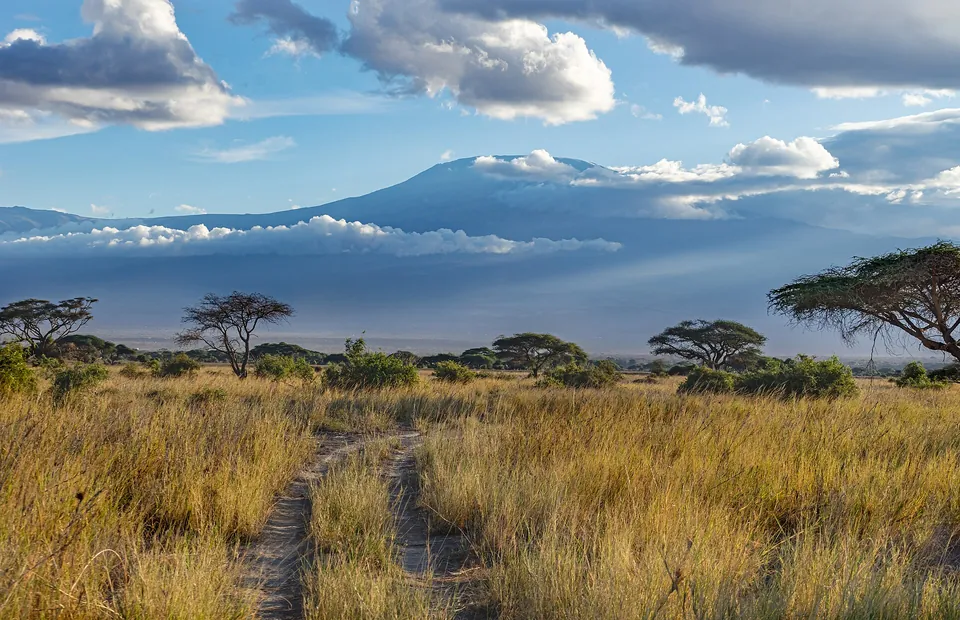
Africa’s highest peak (5,895 m) in eight or nine days via the Marangu, Machame or Lemosho route.