
Climbing the Volcanoes of Ecuador: Pichincha, Iliniza Norte and Chimborazo
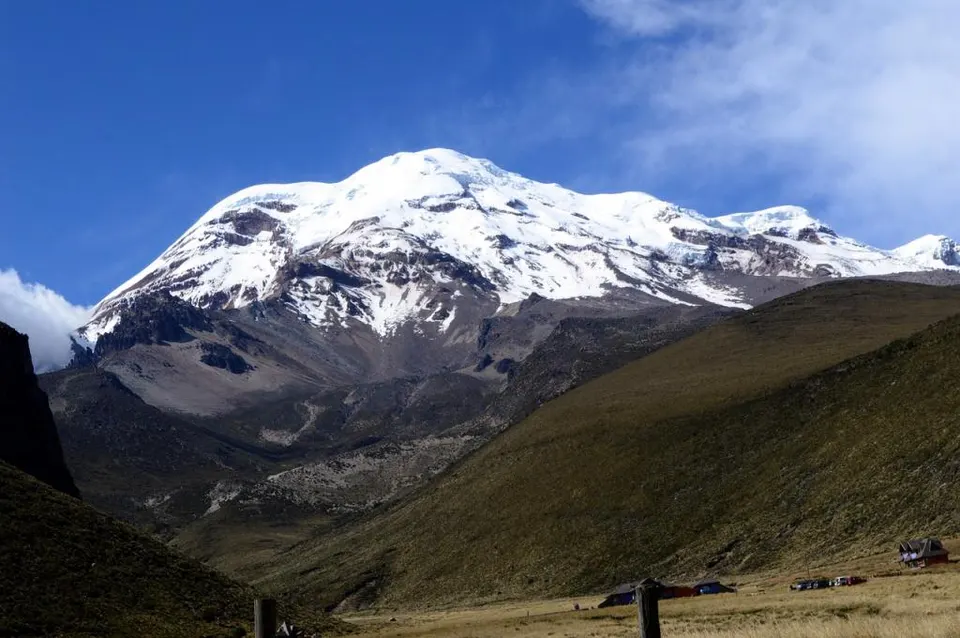
Eleven days, three volcanoes: Guagua Pichincha, Iliniza Norte and Chimborazo (6310 m), whose summit is the farthest point on Earth from the planet’s center.
from $3,790With local guide
- Altitude
- 6263 m
- Duration
- 11 days
- Season
- February
- Start
- Quito
Ecuador (República del Ecuador) lies in the northwest of South America, between Colombia and Peru. The equator runs 25 kilometers north of the capital, Quito, which sits at 2850 meters above sea level.
The country has 40 volcanoes – 26 on the mainland and 14 on the Galápagos Islands – and 16 of them rise above 4500 meters, which makes Ecuador a real Mecca for climbers. During our 11-day program we climb three of them: Guagua Pichincha (4784 meters), Iliniza Norte (5125 meters) and Chimborazo (6310 meters). The summit of Chimborazo is the most distant point on the planet from the center of the Earth.
The program is accessible even for beginner climbers. Keep in mind that Chimborazo requires basic experience of moving on snow and ice, and that we practice this with climbing equipment at the high camp the day before the summit.
Dates and prices
Dates: February 18–28, 2026 (11 days)
- With a Russian guide, group of 2 or more: $4,200
- With a local guide, group of 2 or more: $3,790
Day-by-day itinerary
11 days
Day 1 Arrival in Quito (2850 m) 2850 m
Meeting at the airport and transfer to a 4* hotel. Dinner and overnight at the hotel.
Day 2 Quito sightseeing and first acclimatization
A walk through the historic center of Ecuador’s capital: Spanish colonial architecture, Catholic churches and the viewpoint at the monument to the Virgin Mary. Then we visit the Middle of the World (Mitad del Mundo) monument on the equator, where you can stand with one foot in the northern hemisphere and the other in the southern. At the Museum of the Sun, where the GPS-measured equator line passes, you can see the experiments that show the equator runs exactly through this spot.
Besides sightseeing, the aim of the day is to get used to Quito’s altitude. Overnight at the hotel.
Day 3 Climb of Guagua Pichincha (4784 m), night in Quito 4784 m
The Teleférico cable car takes us up to a viewpoint at 4000 meters above sea level, 1150 meters above the city. Climb of the Pichincha volcano (4784 m). Overnight at the hotel.
Day 4 Transfer to Iliniza Norte, night at Nuevos Horizontes hut (4750 m) 4750 m
We drive along the Avenue of the Volcanoes to Los Ilinizas National Park. The car reaches the village of El Chaupi at 4080 m, then a 3–4-hour hike takes us to the Nuevos Horizontes mountain hut (4750 m). Overnight at the hut.
Day 5 Climb of Iliniza Norte (5125 m), transfer to Baños 5125 m
An early start for the climb of the northern summit of Iliniza, 5125 m. The route first follows the crest of the mountain, then steep rocks begin. The path is laid so that no climbing training is needed. In the rainy season the rocks are covered with snow; then we move roped together, but crampons are not required.
Descent to 4080 m and transfer by jeep to the resort town of Baños, the “Gateway to the Amazon”. Overnight at a 4* hotel in Baños.
Day 6 Rest day in Baños
Thermal baths, waterfalls, mountain biking, river rafting or local sights – the choice is yours. Overnight at a 4* hotel in Baños.
Day 7 To the foot of Chimborazo, Chakana Lodge (3600 m) 3600 m
Early in the morning we head to the foot of Chimborazo, to Chakana Lodge at 3600 meters. After check-in we make an acclimatization walk up to the high camp at 5350 meters and come back down.
Day 8 Move to the high camp (5350 m), training 5350 m
After breakfast we move up to the high camp. Once settled in the hut, we train with climbing equipment and practice moving in crampons and roped together. Back at the camp, dinner and an early night.
Day 9 Summit of Chimborazo (6310 m) 6310 m
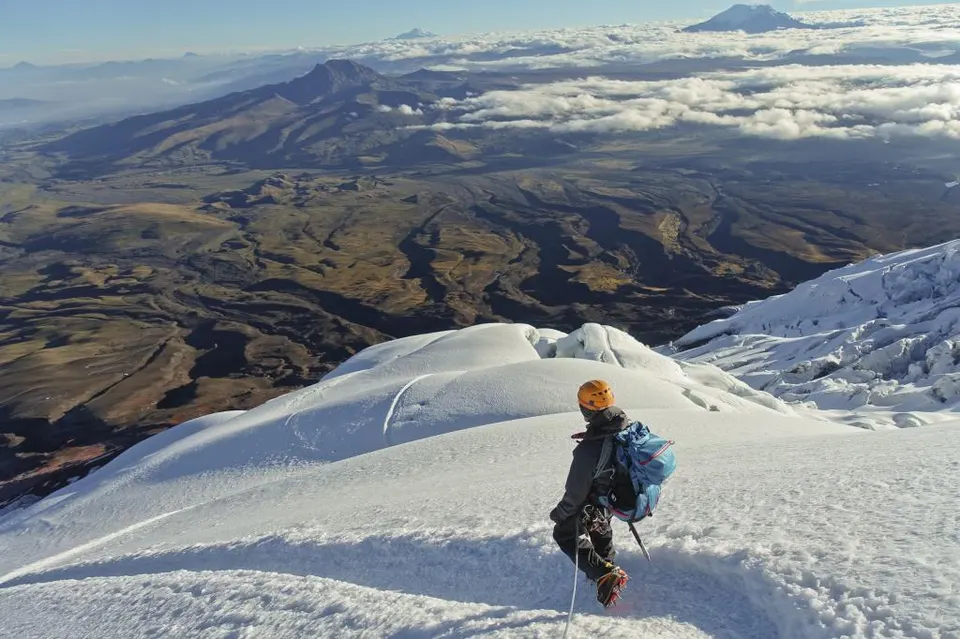
A hard, long day. We start at night; the ascent takes about 6–7 hours and the descent 4–5 hours. The route follows snow and ice slopes of up to 30 degrees. The climb is not easy, but anyone in good physical shape can do it. Basic mountaineering experience on snow and ice is required. In clear weather the summit opens a stunning panorama of Ecuador’s volcanoes.
After the summit we descend to the high camp, rest briefly, return to Chakana Lodge and transfer to Baños.
Day 10 Reserve day or rest in Baños
Day 11 Transfer to Quito, end of the tour
What’s included
Included
- All transfers according to the program
- A qualified Russian guide on Pichincha
- Qualified Russian and local English-speaking guides on Iliniza and Chimborazo
- Accommodation in 4* hotels in cities with breakfast (double rooms)
- Accommodation and meals in mountain huts according to the program
- Group climbing equipment
- National park entrance permits, park taxes and fees
Not included
- Flights to Quito (Ecuador) and back
- Climbing medical insurance
- Lunches and dinners in hotels
- Rental of personal equipment
- Single supplement in hotels (about $200 for 6–7 nights)
- Tips for local staff
Equipment list
Technical and travel gear
- Climbing harness
- Ice axe
- 2 carabiners
- Trekking poles
- Sunglasses, protection category 4 or higher
- Ski goggles (mandatory)
- Sunscreen, SPF 40 or higher
- Crampons (preferably automatic, if your boots allow)
- Headlamp
- Climbing backpack, 55 liters or more
- Thermos
- Sleeping bag
Clothing and footwear
- Thin fleece sweater or shirt
- Fleece jacket and trousers, ideally windproof (Windbloc or Windstopper)
- Wind- and waterproof jacket and trousers, preferably with a Gore-Tex-type membrane
- Warm hat
- Balaclava – a wind mask that covers the nose, lips and chin, ideally with a breathing hole
- Down jacket
- Thermal underwear
- Gloves, preferably Windbloc or Windstopper
- Insulated overmitts to wear over gloves
- Climbing boots
- Trekking shoes